INTERVIEW | Mwalimu Yusuph Pangoma: a Teacher in rural Mara – Tanzania who is changing the narrative

Mwalimu Yusuph, a talented teacher who has won international admiration through social media, shares about his early life journey, his career experiences, aspirations, as well as the change he wishes to see in the society and in primary education in Tanzania.
International Literacy Day: Transforming Learning Globally

Literacy in a widened understanding goes beyond the conventional, i.e. ‘reading and writing’ as the global dream incorporates the impartation of skills which help to nurture talents and also to foster measurable and functional participation in society.

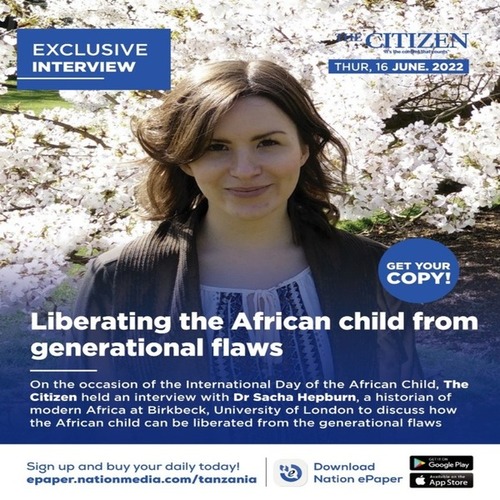
INTERVIEW | Sacha Hepburn PhD, University of London: How will the African Child be liberated from the generational flaws?

Dr Sacha Hepburn who is a historian of modern Africa at Birkbeck, University of London speaks at length, among other things, about the effects of racialized constructions of African childhood
on the occasion of the International Day of the African Child. She specialises in histories of gender, age, work, and the environment, and she is the author of Home Economics: Domestic Service and Gender in Urban Southern Africa (2022) and a number of published essays.

INTERVIEW | TZ Ambassador to Belgium uncovers education opportunities for Tanzanians

Ambassador Jestas Abouk Nyamanga availed his time to discuss the various educational opportunities that the Belgian Government and the European Union avail for Tanzanians who are interested and meet the requirements as we bring them forth.

World Braille Day and the need to empower the visually impaired population

Globally, as per research on the global prevalence of blindness and distant and near vision impairment which was published by iOVS Journal in 2020, out of the global population of 7.79 billion people in the year 2020, 41.9 million were visually impaired.

Why all parents should read “The book of Tea”

Tea is not a mere beverage; this is because it functionally connects with ethics, religion, and social order. When a child is taught well to manage “tea”, s/he will be able to manage and grow with morals and discipline as is desired by the society in which s/he is groomed.